Professionals
Professors and clinicians from Mexico and the United States.

Graduate program in Mérida, Mexico
Would you like to keep studying and help other people regain their skills? Study in a hybrid format at the only institution in southeastern Mexico offering occupational therapy at the graduate level.
What makes INTSA different
Our educators hold master’s and doctoral degrees related to the programs we offer.
Professors and clinicians from Mexico and the United States.
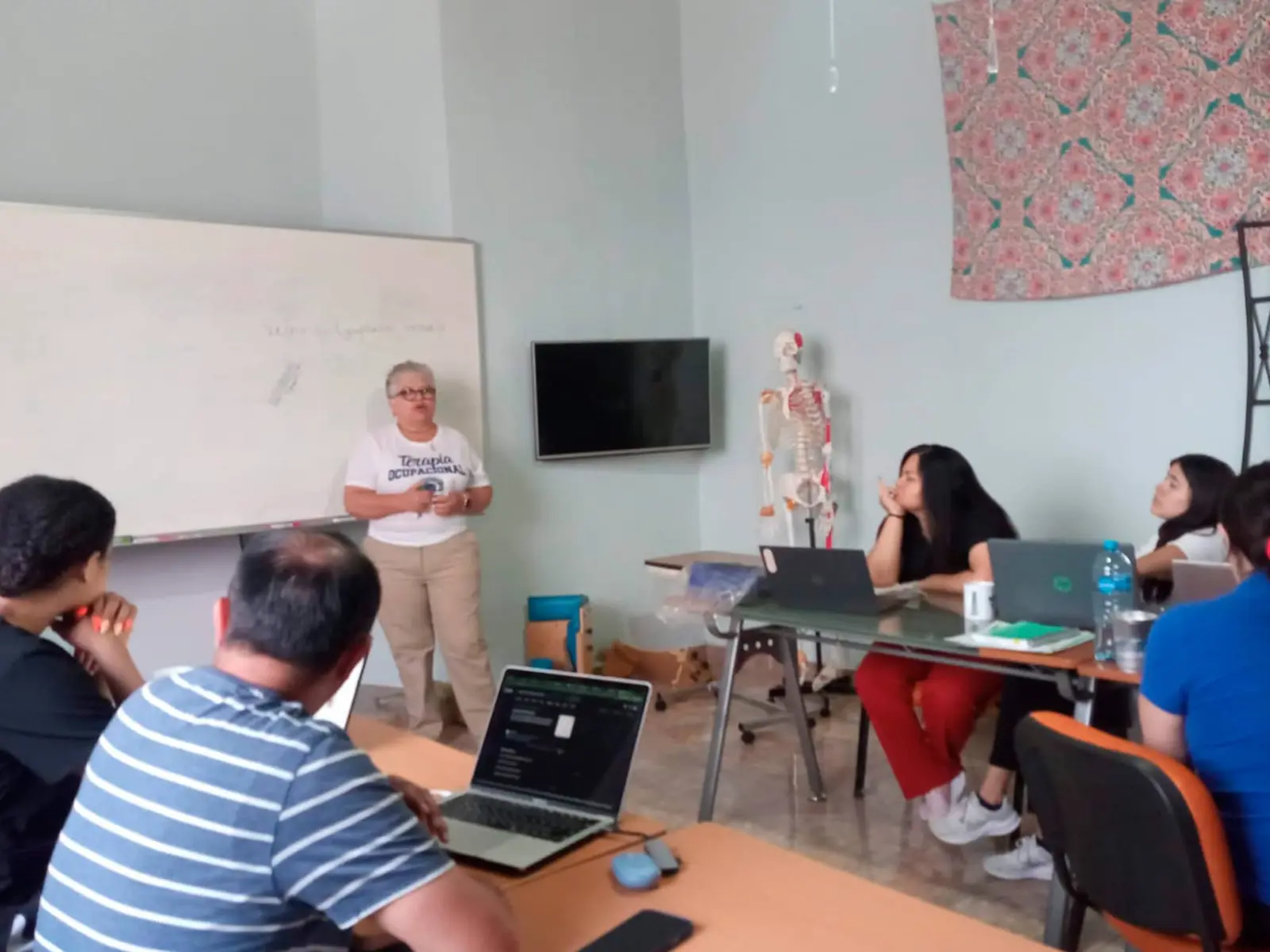
Equipped classrooms; pediatric, geriatric, adult and daily living labs; a library and a computer room.
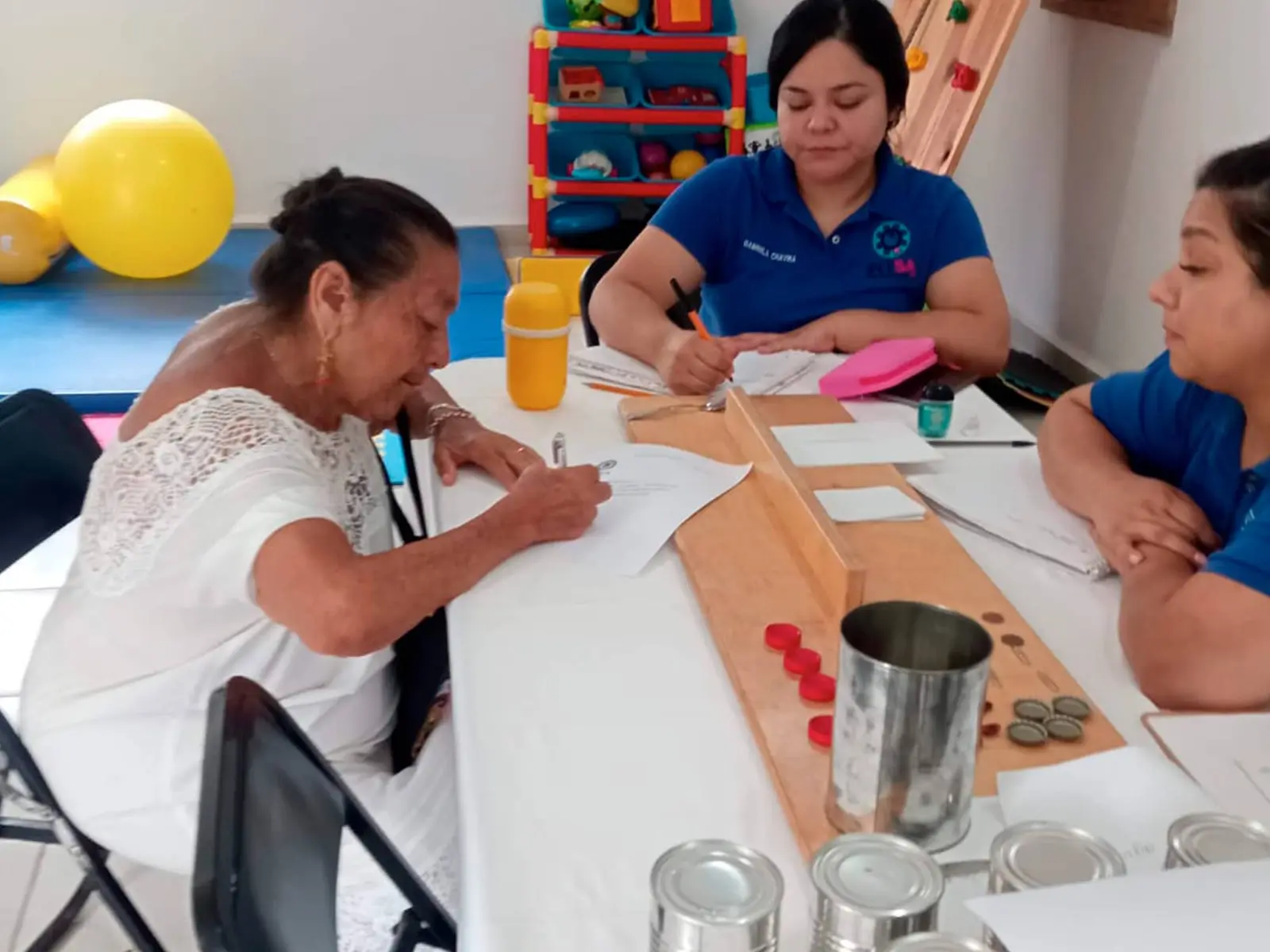
Hands-on experience in mental health, pediatrics, adults and geriatrics.
National and international standards so you can aim for the NBCOT exam.
The program at a glance
Length, format, platforms and faculty: what people ask most when they want to study occupational therapy in Mérida.
Live online classes + 6 on-site labs.
Faculty from Mexico and the United States.

Hybrid format
Classes are live online sessions with your professors; on-site labs give you hands-on practice with patients, materials and supervision.
Objective and curriculum design
We train therapists who can design and implement rehabilitation projects and generate new knowledge through research.
To train occupational therapy professionals with the knowledge, skills, values and attitudes to design, organize and implement rehabilitation, compensation and adaptation projects, and to venture into research to generate new knowledge.
The program was designed under the standards of Mexico’s Interinstitutional Commission for the Training of Human Resources for Health (CIFRHS) and national and international educational standards. This allows our graduates to aspire to take the U.S. national certification exam in Occupational Therapy, administered by the National Board for Certification in Occupational Therapy (NBCOT).
Curriculum
Choose a term to see its courses. From the third term on you add fieldwork in mental health, pediatrics, adults and geriatrics.
01of 6 terms
02of 6 terms
03of 6 terms
04of 6 terms
05of 6 terms
06of 6 terms
Applicant profile
Beyond a solid foundation in health sciences, we look for applicants with a calling to serve and a willingness to work closely and compassionately with patients.
Applicants without a background in health sciences must take and pass a preparatory course.
Graduate profile
When you finish, you will be ready to promote the independence and quality of life of your clients, their families and your community.
When you take time to replenish your spirit, it allows you to serve others from the overflow. You cannot serve from an empty vessel.
Graduates master and apply theoretical and philosophical concepts about the occupational nature of human beings.
Their knowledge of the biological and social sciences, together with the use of occupation, allows them to promote the independence and quality of life of their clients and families, their community and society.
They use their skills, values, flexibility and leadership to promote health, foster inclusion and advance occupational justice.
They generate new knowledge, grounded in research and evidence-based practice, to advance the profession.
Admissions
To be accepted, you complete a series of steps that show your strengths and your commitment to the profession. The steps depend on your academic background.
Important
If you want to practice in the U.S., there are additional requirements you must meet. We’ll guide you through them.
Complete INTSA’s academic program.
Complete and pass Level II Fieldwork: six months of practice supervised by a U.S.-licensed OT.
Note: during this period you remain an INTSA student, with all the corresponding obligations.
Request authorization to take the national occupational therapy certification exam.
If you pass the exam, you can apply for a license in the state where you want to practice.
Note: Instituto Interamericano de la Salud does not guarantee that your application will be accepted or that you will pass the national occupational therapy exam.
Our graduates
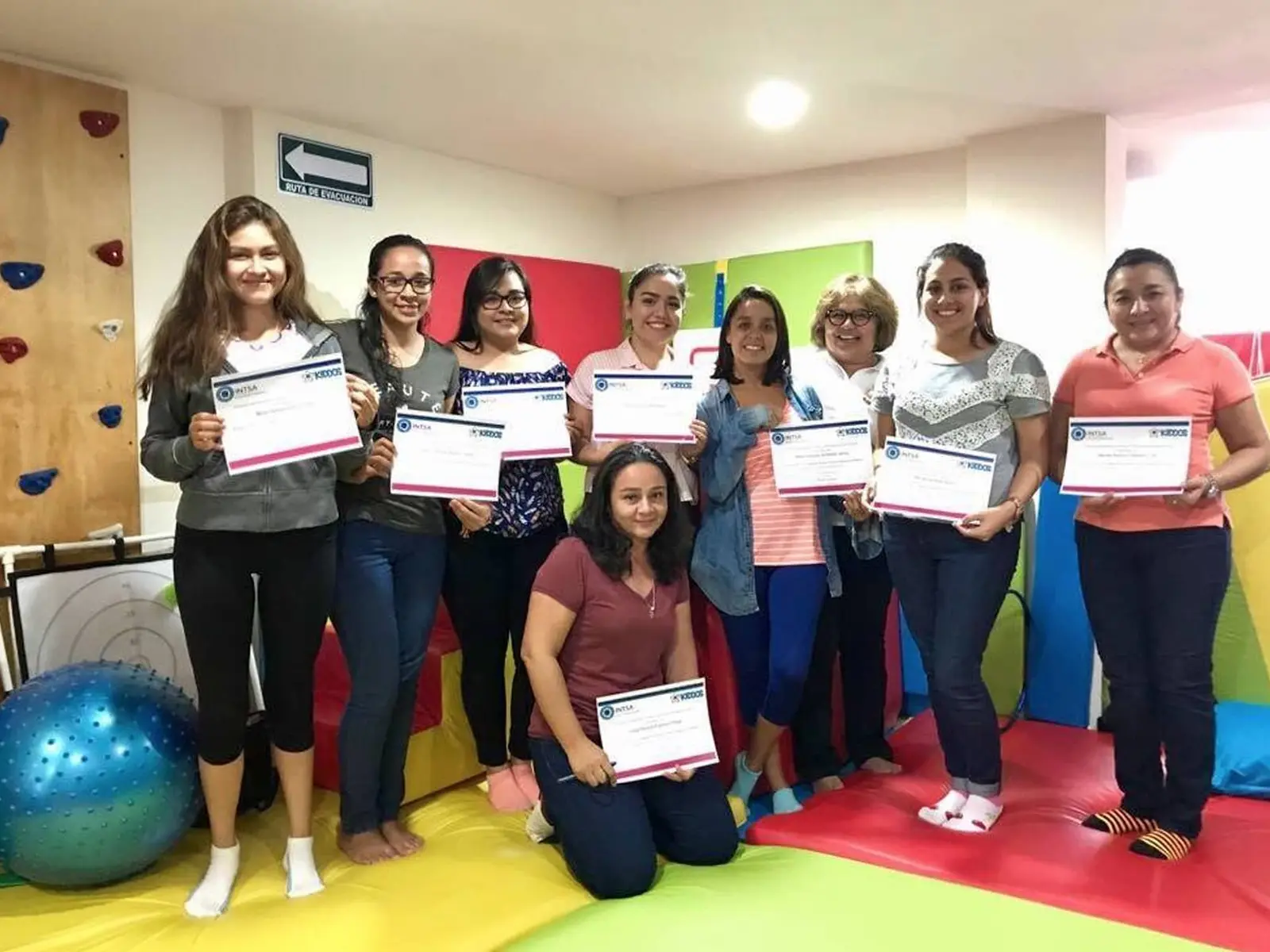
Real photos of our classes: graduations, diploma ceremonies and fieldwork. Tap one to enlarge it.
Frequently asked questions
If you don’t find your answer here, message us on WhatsApp.
It’s hybrid: live (synchronous) online classes plus 6 on-site labs in Mérida. We work with platforms such as Moodle, Canvas, Simucase, EBSCO and Medbridge.
Six four-month terms. They combine evaluation and treatment courses, evidence-based practice, clinical research and, from the third term on, fieldwork.
If your background is in health sciences: fill out the application, write a free-format letter of intent, send your scanned documents and take and pass the entrance exam. If your background is in another field, you also take and pass a preparatory course before the exam.
Yes. You need to be able to read scientific literature in English, and you need a background in health sciences.
Yes. It holds federal official recognition of studies (RVOE), number 20263623.
If you meet the NBCOT’s additional mandatory requirements, you will be able to practice in the U.S.
Yes, the Bachelor’s Degree in Psychopedagogy: eight four-month terms plus a thesis seminar, taught on campus.
At Calle 61 No. 442 x 50 & 52, Centro, Mérida, Yucatán, Mexico. Our office hours are Monday to Friday, 9:00 a.m. to 4:00 p.m.. Call or message us on WhatsApp at +52 (999) 368 2814.